|
In the mid fifties, microphone use started to change: entertainers wanted to take things in their own hands, they wanted to be free during their performance, not just limited to the fixed spot where their microphone stand was placed. They wanted to move around and make the whole stage their playground. That meant that they needed a microphone they could take from the stand, to use it as a handheld.
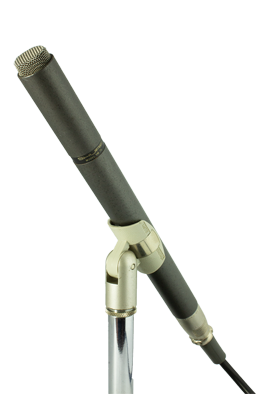
Shure realised the need for a handheld type and presented the 'Slendyne' 530 omni directional probe microphone, for PA and broadcast, in 1955, priced $110. The dedicated A25 swivel adapter allowed the mic to be taken of the stand for hand use.
A year later the Slendyne (Slender Dynamics) range was expanded with the more budget friendly 535 ($70), and the expensive 525 studio version ($200).
Of course the 535 was the most popular of the trio, it was sold until 1967, when the 'ultra slim' model 578, with 3/4" diameter (1,9cm), was introduced. The model 576 was the broadcast version, which was renamed into SM 76, in 1969. As I wrote earlier, by then the omni's were no longer used much on stage, the cardioid types ruled.
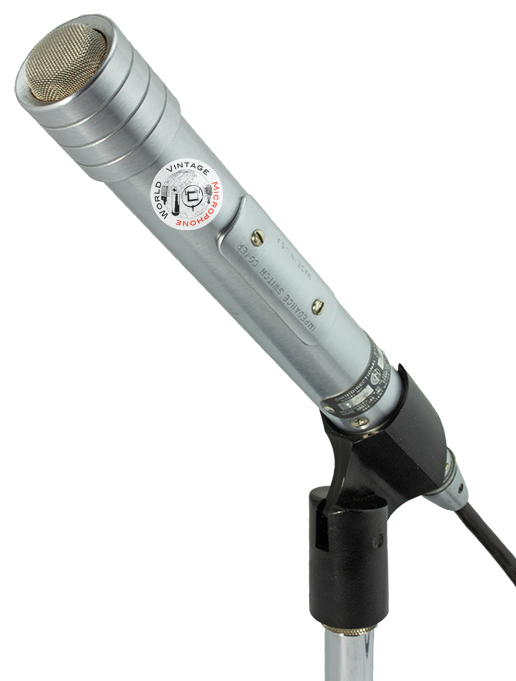
The 535 was a very sturdy mic, and unaffected by temperature and humidity, Shure specially recommended it for reporters, for interview use, where its 'hand-a-bility' was important.
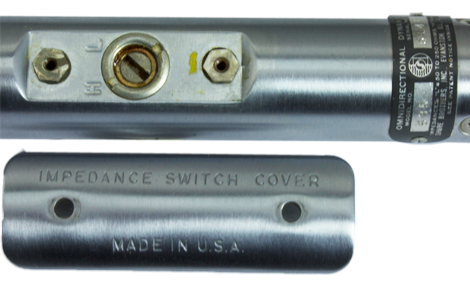
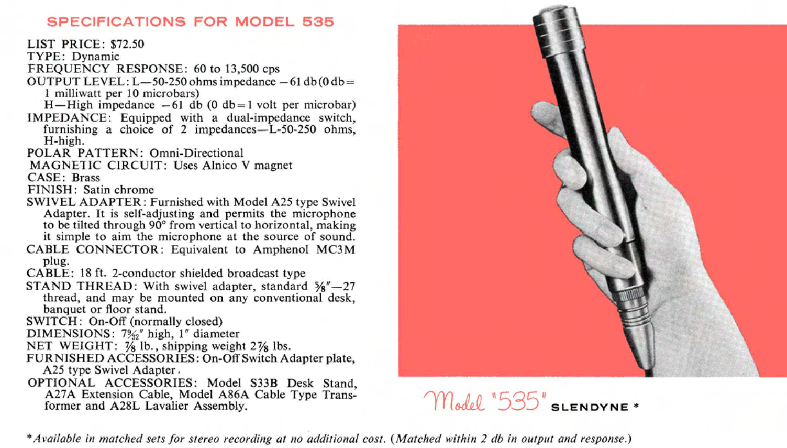
In fact the 535 'Slendyne' was promoted as five microhones in one, it could be used 1-on a conventional floor stand, 2- on a desk stand, 3 - in the hand, 4- around the neck with a lavalier cord, and 5 - the dual-impedance switch, 50-250 Ohms, or High Z made it even more versatile.
The microphone was quite heavy , its weight was 350 grams, without the MC3M Amphenol connector. The studio 525 and 530 were fitted with a XL-3-11 connector.
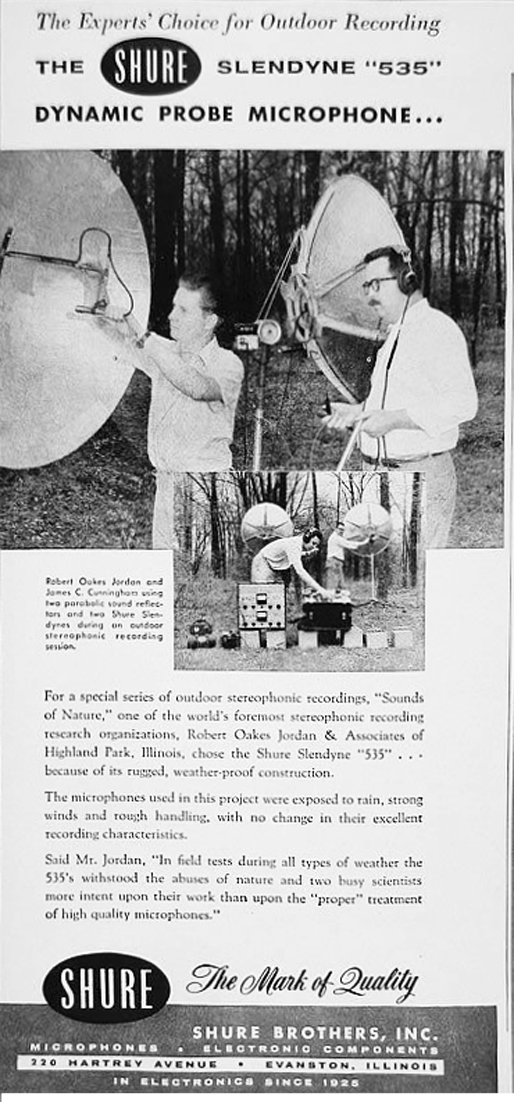
The 535 was also heralded as great for home tape recording, and, since it could be used outside there were more uses, like the ad on the right shows.
I have no idea how many of 535s were made, but in Europe it is not a common type, the Sennheiser MD 21 was used much more often, it was smaller and weighed less than half of what the 535 weighed.
The SM 76 did not impress much either in Europe, perhaps it did somewhat better in the US, but certainly not as good as the cardioid SM 57 and SM 58, of which were hundreds of thousands sold.
Many more types feature in my book Witnesses of Words. More information about that can be found at www.witnessesofwords.com
|
|
|
|
|
Top: the slender shape of the 535 & the dual Z switch in the body and its cover
Below: sound, specs from 1960 & 535 ad |
|
|
 |
|
|



 Video's
 Contact